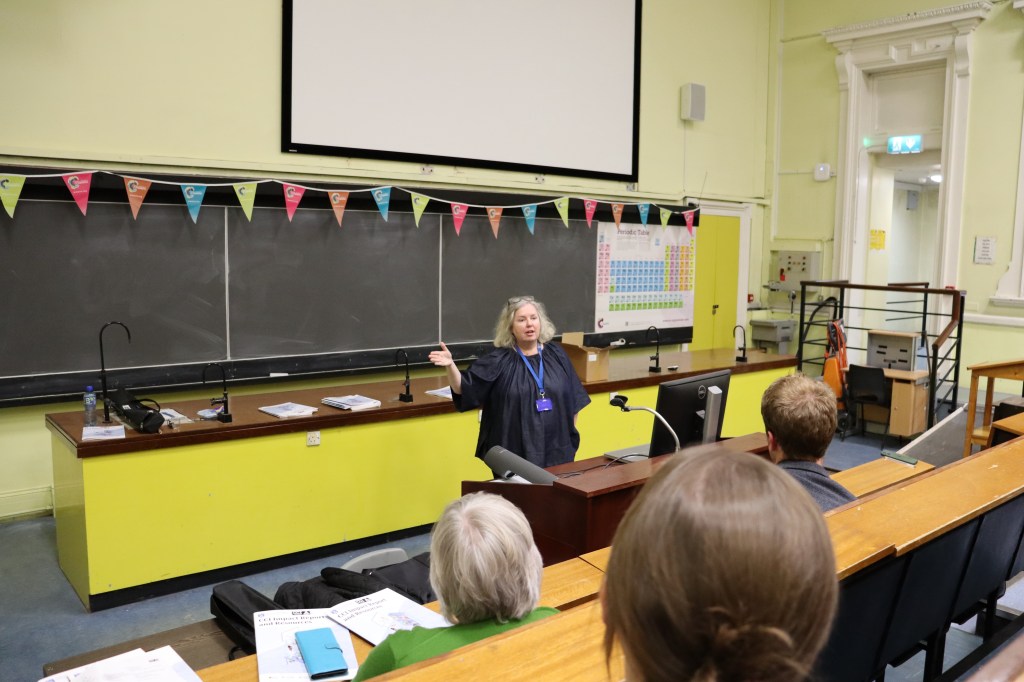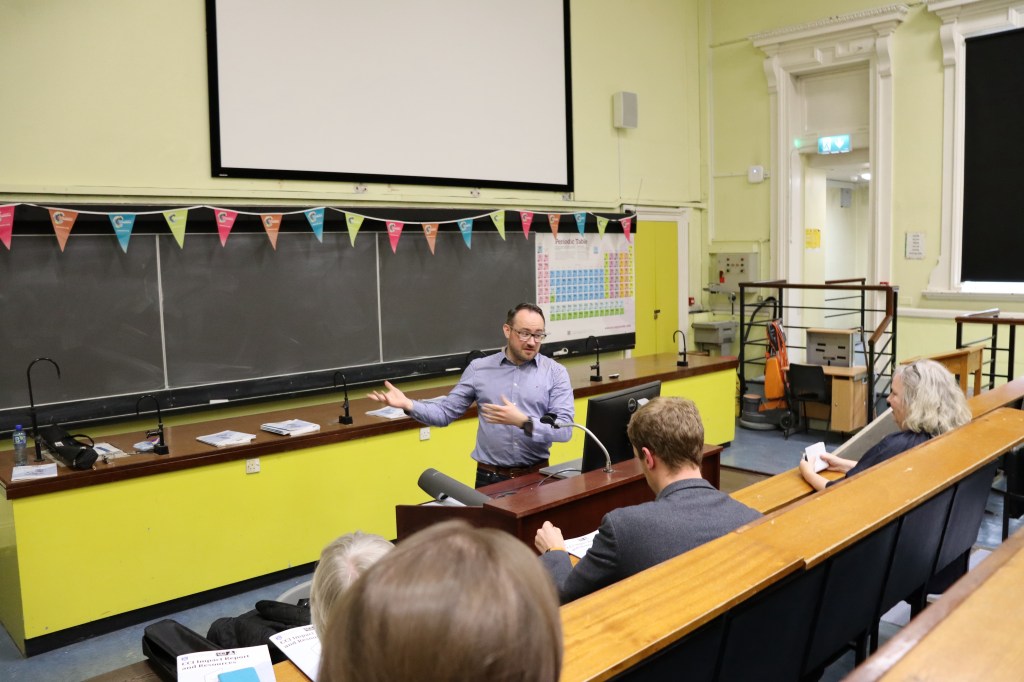
And after five successful years, the Trinity-led CCI informal education and public engagement programme came to a close with the launch of a colourful Impact Report. Funded by Research Ireland since 2021, the programme brought together over 100 researchers from Trinity, ATU Sligo, University College Cork and Tyndall National Institute to engage with schools and members of the public about the science behind green energy.
The idea for CCI was developed during the COVID pandemic when project manager, Dr John O’Donoghue (RSC Education Coordinator, Trinity), noticed that students lost valuable opportunities to meet career role models. This loss was particularly impactful for DEIS schools and those from socio-economically disadvantaged backgrounds, while early career researchers also lost opportunities to develop valuable communication and presentation skills, coupled with reduced levels of feedback and support from those outside of academia.
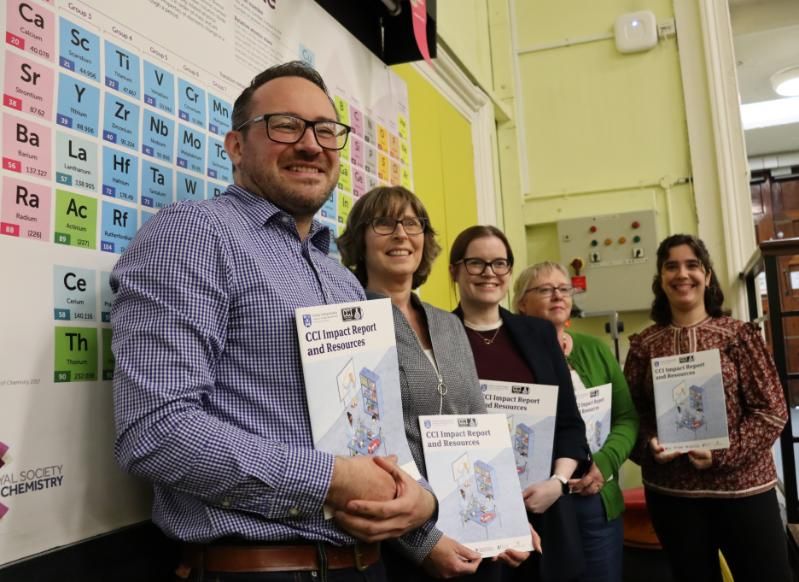
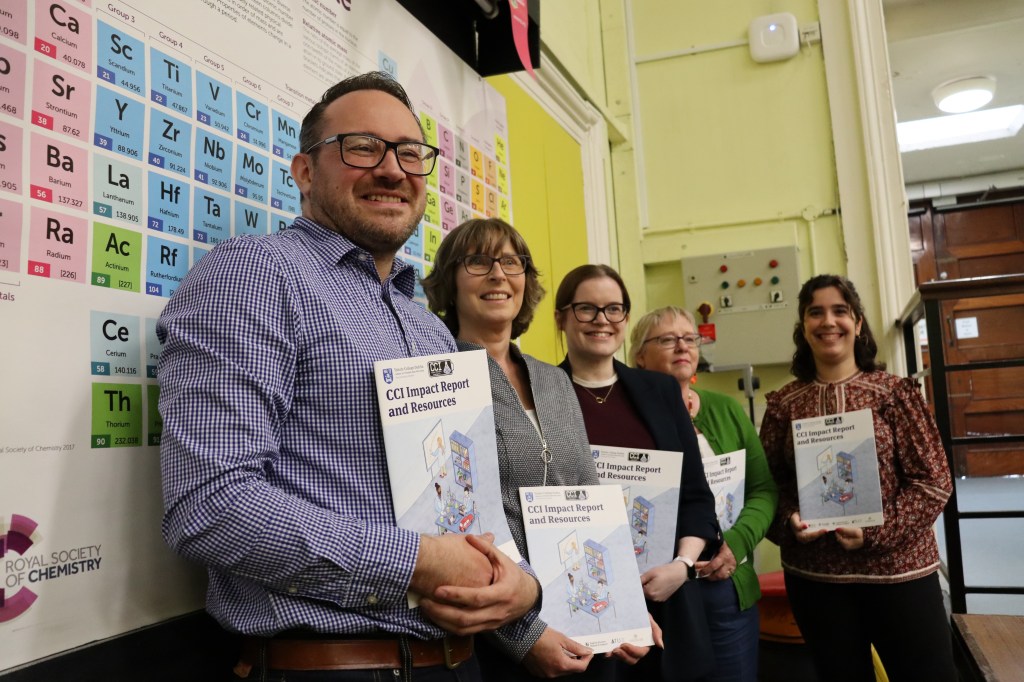
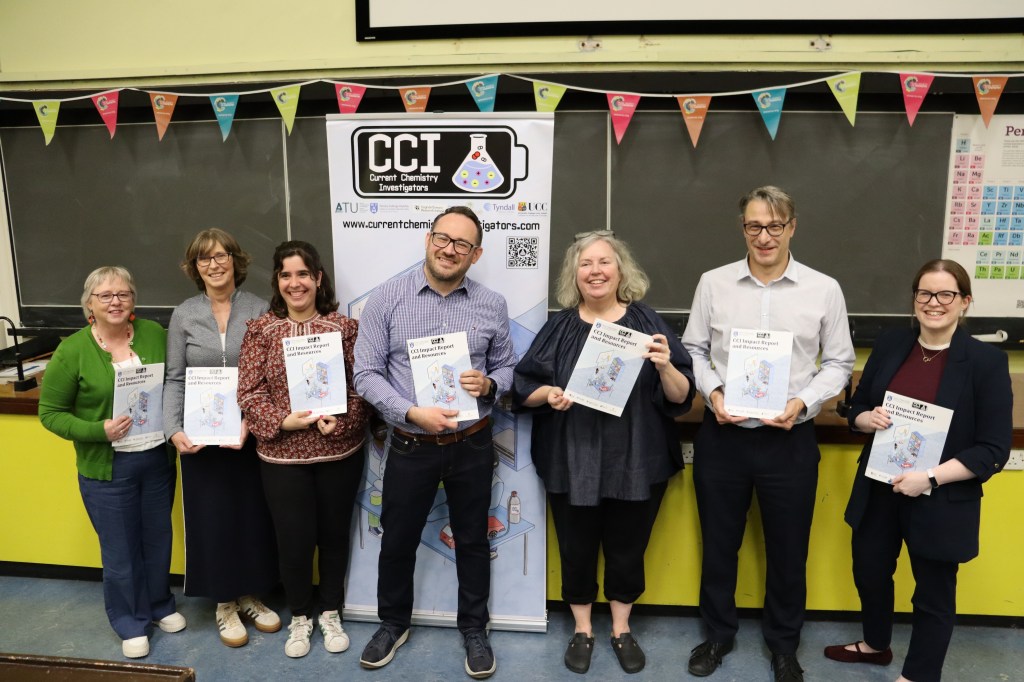
Left to right at the launch are Dr John O’Donoghue, Fiona McArdle, Niamh McGoldrick, Mary Connolly, and Natalia Garcia Domenech. Photo by Michael Foley, Civic Engagement for Societal Impact Manager, Trinity College Dublin.
Dr O’Donoghue, from Trinity’s School of Chemistry, said: “The CCI programme grew far beyond its original targets, reaching over 50,000 people from all walks of life. The team facilitated hands-on activities and sparked conversations at an array of events such as the National Ploughing Championships, the Ballina Salmon Festival, the Night and Day festival and the Boyle Arts Festival among others.
“As well as showcasing green energy and current research, the CCI public engagement activities also pioneered accessible ways of running hands-on STEM activities by ensuring access for wheelchair users and offering both visual and audio outputs for those with sensory impairments. The enthusiastic team also ran 261 secondary school workshops across the entire country, with nearly 5,000 Transition Year (TY) and Leaving Cert (LC) students. They provided students with tangible STEM role models and valuable opportunities to ask questions about STEM careers and current research topics.”
The project made a substantial direct and indirect societal impact. Teachers reported an increased number of TY students choosing to study chemistry for LC, as well as an increase in students continuing to study science after school as well.
There has also been an increase in the number of schools offering chemistry for LC nationwide, which is especially important for DEIS schools since they are less likely to offer physics and chemistry for LC, while there has also been an increase in SUSI grant holders for the TR061 Chemical Sciences course at Trinity and early career researchers reported a renewed enthusiasm for their scientific research.
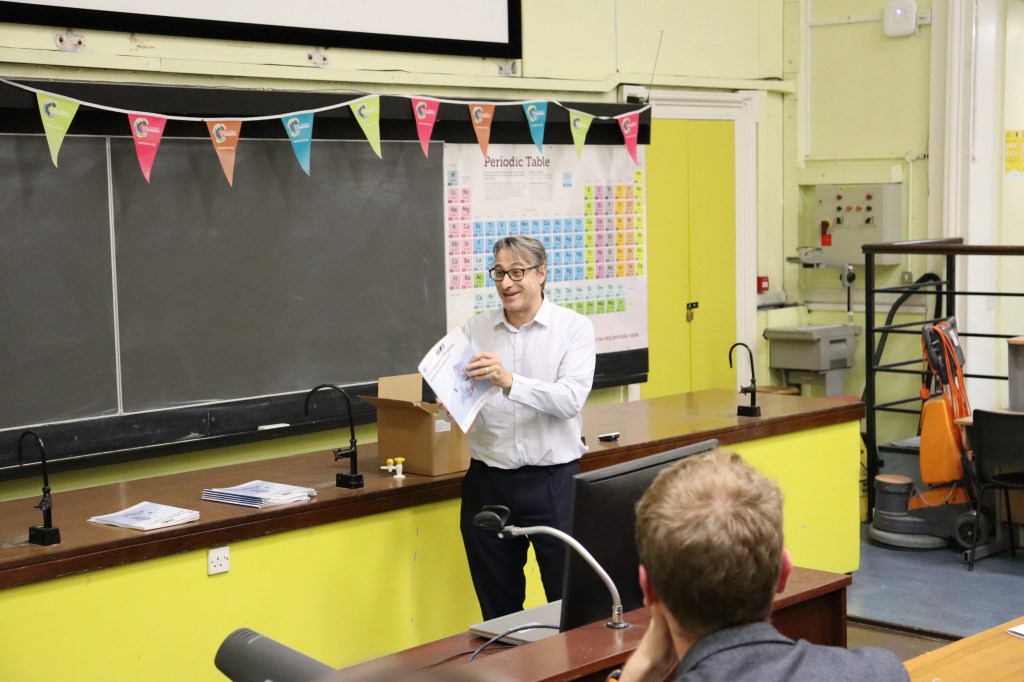
Provost Dr Linda Doyle commended the enthusiasm of the researchers involved, while Prof. Graeme Watson, Head of Trinity’s School of Chemistry, also thanked the project team and all the early career researchers for their hard work over many years. Project leaders in attendance at the impact report launch also include Dr Niamh McGoldrick, School Manager, Trinity’s School of Physics, and Dr Natalia Garcia Domenech, Research Fellow, as well as partners from ATU Sligo, Dr Fiona McArdle and Mary Connolly.